Lighting has changed dramatically over the last few years. A light is no longer limited to a bulb fixed to a ceiling or a lamp sitting on a table. Today, people can carry powerful lighting in their pocket, attach a small light directly to a smartphone, or use a rechargeable LED anywhere without depending on a permanent electrical connection. This is where Mobile LED Lights have become increasingly useful for everyday users, content creators, students, travelers, shopkeepers, photographers, and families. Mobile LED Lights: Complete Guide to Portable, Rechargeable and Smartphone LED Lights
The term mobile LED light can describe several portable lighting products. Some are designed specifically for smartphones, while others are small rechargeable lamps that can be moved from one room to another. Their common purpose is simple: provide useful illumination wherever it is needed. Because LED technology can produce substantial light while using relatively little electrical power, it has become a practical choice for portable lighting.
What Are Mobile LED Lights?
Mobile LED Lights are compact lighting devices designed to provide illumination without requiring a permanently installed light fixture. Depending on the design, a mobile LED can run from a rechargeable battery, USB power, replaceable batteries, or another portable power source. Smartphone versions may attach to the phone using a clip, magnetic connection, or another mounting system.
The biggest advantage of this type of lighting is flexibility. You can use a portable LED light in a bedroom during a power interruption, carry one while traveling, place one beside a workstation, or attach a small phone light when recording a video at night. Instead of changing the entire room’s lighting, you simply take the light where you need it.
For content creators, the idea is even more useful. A smartphone camera may be capable of recording high-resolution video, but poor lighting can still make the final footage look dull or uneven. A compact LED positioned near the phone can provide additional illumination and make the subject easier to see.
Why Mobile LED Lights Are Becoming Popular
The popularity of portable lighting is connected to the way people use technology today. Smartphones are used for photography, video calls, social media videos, online classes, business communication, product demonstrations, and entertainment. As a result, there is growing demand for accessories that improve the smartphone experience.
A small LED light for mobile phones can solve a very simple problem: insufficient light. Someone recording a TikTok video in a room with weak lighting may use a clip-on light to illuminate their face. A small business owner photographing a product may use portable lighting to reduce shadows. A student attending an online meeting at night can use additional light to make their face more visible.
Portable rechargeable lamps have another important advantage. They can continue providing light when a conventional electrical connection is unavailable. In Pakistan, rechargeable lighting is particularly useful in situations involving electricity interruptions, outdoor activities, shops, homes, and emergency situations.
Different Types of Mobile LED Lights
Not every portable LED is designed for the same purpose. Understanding the different designs makes it easier to choose a product according to your actual requirements.
A clip-on mobile LED light is one of the smallest options. It normally attaches to the edge of a smartphone and points toward the user or subject. Because of its compact size, it can easily fit inside a pocket or small bag. This type is particularly useful for selfies, video calls, short videos, and quick photography.
Another option is the portable LED panel. These lights are generally larger than phone clip lights and can produce a broader beam. They may include brightness controls, multiple color-temperature settings, rechargeable batteries, and mounting options. A small panel can be useful for creators who want more control over their lighting.
Ring lights are another popular category. Instead of producing light from one small point, a ring surrounds the camera area with LEDs. This design can provide relatively even front lighting and is commonly used for beauty videos, tutorials, livestreams, interviews, and social media content.
There are also rechargeable mobile LED lamps designed for general household use rather than smartphone photography. These may have handles, stands, magnetic backs, hooks, or other mounting options. Some models are intended for emergency lighting, while others can be used for camping, reading, workspaces, or outdoor activities.
Mobile LED Lights for Content Creators
Content creation is one of the most interesting uses of portable lighting. A creator does not always have access to a professional studio, large softboxes, or expensive photography equipment. A small LED light can provide a practical alternative when recording with a smartphone.
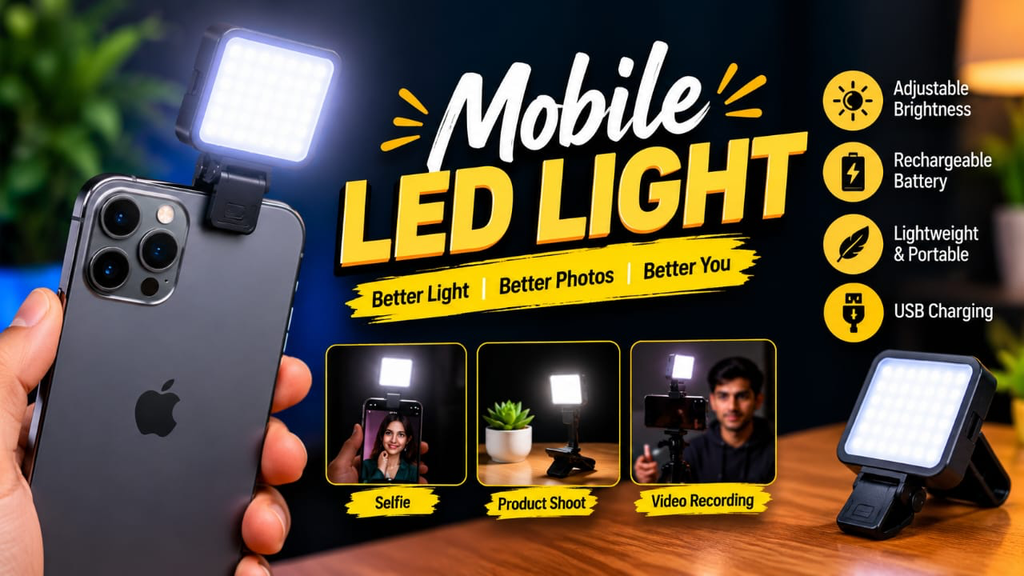
For face-to-camera videos, the position of the light matters almost as much as the brightness. Placing the light directly beside or slightly above the phone can illuminate the face without requiring a complicated setup. If the light is extremely close to the face, however, it may look harsh. A diffuser or softer light source can produce a more comfortable appearance.
Creators should also pay attention to color temperature. LED lights can produce different visual appearances, ranging from warm yellowish light to cooler daylight-like light. Color temperature is measured in Kelvin, with lower values generally appearing warmer and higher values appearing cooler.
This allows a creator to match the light with the surrounding environment. For example, warm indoor lighting may look better with a warmer LED setting, while daylight coming through a window may work better with a cooler setting.
Understanding Brightness: Lumens vs Watts
One of the most common mistakes when buying an LED light is judging brightness only by wattage. Watts primarily describe power consumption, while lumens measure light output. This distinction is important because modern LEDs can produce useful amounts of light without requiring the same electrical power as older lighting technologies.
For a mobile LED light, the practical question is not simply “How many watts does it have?” Instead, consider how much usable light the product produces, how wide the light spreads, and whether brightness can be adjusted.
A very bright light is not automatically better. If you are recording a close-up video, excessive brightness can create harsh highlights and uncomfortable shadows. A light with several brightness levels can therefore be more useful than one that only operates at maximum intensity.
Rechargeable Mobile LED Lights and Battery Backup
A rechargeable LED is particularly convenient because you do not need to keep buying disposable batteries. Most rechargeable models use an internal battery that can be charged through a cable. Depending on the product, charging may be available through USB or USB-C.
When choosing a rechargeable model, do not look only at the battery capacity printed on the packaging. Consider the relationship between brightness and runtime. A light might provide long battery life at its lowest brightness but considerably less runtime at maximum brightness.
If you regularly experience electricity interruptions, battery backup becomes even more important. Pakistani buyers can also consider whether the light supports convenient charging, has multiple brightness levels, and provides a battery indicator. Rechargeable LED buying guides commonly recommend evaluating battery capacity, charging time, brightness, portability, durability, and warranty before purchasing.
Choosing the Right Color Temperature
Color temperature can completely change the appearance of a room, photograph, or video. It is measured in Kelvin, commonly abbreviated as K.
Warm light generally falls around the lower Kelvin range and creates a softer, more yellowish appearance. It can work well in bedrooms, lounges, restaurants, and relaxing environments. Neutral white sits closer to the middle of the range and can be suitable for kitchens, offices, and work areas. Cooler daylight-style lighting is often used when stronger visual clarity is desired.
For smartphone content, adjustable color temperature is especially useful. You may record one video during the daytime and another at night, with completely different surrounding light. A bi-color LED light can make these situations easier to manage because the user can adjust the appearance of the light instead of relying on a fixed color.
What Is CRI and Why Does It Matter?
Another specification worth understanding is CRI, or Color Rendering Index. It relates to how accurately a light source reveals colors compared with a reference light source. For photography and video, color accuracy can be important because skin tones, clothing, products, and backgrounds should appear reasonably natural.
A cheap LED may be extremely bright but still produce an unpleasant color cast. This is why shoppers should not assume that the brightest light is automatically the best light for photography. Phone-light buying guidance commonly recommends paying attention to CRI, color temperature, diffusion, power, and mounting stability.
Mobile LED Lights for Power Outages
Portable LEDs are not only for social media creators. They can also become extremely useful household tools.
During a power outage, a rechargeable LED can provide immediate illumination without requiring a candle or permanently installed emergency lamp. A small light can be kept near the bed, in a drawer, inside a vehicle, or close to the entrance of a home so that it is available when needed.
Some rechargeable models include automatic emergency functions, multiple brightness levels, USB output, or solar charging options. However, features vary significantly between products, so buyers should check the actual specifications rather than assuming every rechargeable LED provides the same functions.
Mobile LED Lights for Photography and Small Businesses
Small businesses can also benefit from portable lighting. Imagine someone selling watches, cosmetics, clothes, handmade products, food, or accessories through social media. A smartphone may already be enough to capture the product, but additional light can improve visibility and reduce unwanted shadows.
A portable LED can be positioned from different directions until the product looks clear. This flexibility is valuable because products made from glass, metal, plastic, or glossy surfaces can react differently to light.
For online sellers, better product lighting can make photographs and videos easier to understand. The goal is not necessarily to make the product look artificially bright; instead, the objective should be to reveal its actual details and colors as naturally as possible.
Important Things to Check Before Buying
Before purchasing a mobile LED light, think about where you will actually use it. A person buying a light for TikTok videos may prioritize brightness adjustment, color temperature, CRI, and phone mounting. Someone buying an emergency light may care more about battery backup, charging, durability, and portability.
Build quality should also be considered. If the light has a clip, hinge, stand, or magnetic mounting system, these components should feel stable enough for regular use. A weak clip can become frustrating if the light repeatedly falls from the phone.
Charging compatibility is another practical consideration. A rechargeable LED that uses a commonly available cable is generally easier to maintain. Buyers should also check whether the manufacturer provides information about battery capacity, expected runtime, charging time, and warranty.
If the light will be used outdoors, additional protection may matter. An IP rating can provide information about resistance to dust and water, although the exact rating should be checked rather than assuming that every portable LED is weather-resistant.
Common Mistakes People Make
One common mistake is purchasing a light simply because its packaging claims extremely high brightness. Advertised specifications should always be considered alongside the product’s size, battery capacity, build quality, and independent user feedback.
Another mistake is using maximum brightness all the time. Maximum output can consume the battery faster and may produce harsh lighting. In many situations, medium brightness positioned correctly can create a more balanced result.
Buying a very cheap unbranded light without checking charging, battery, or build information can also create problems. The cheapest product may look attractive initially, but reliability becomes important when the light is needed regularly.
Are Mobile LED Lights Worth Buying?
For many users, the answer depends on the purpose. If your phone is mainly used outdoors during daylight, you may rarely need additional lighting. But if you record videos indoors, attend frequent video calls, take product photographs, travel at night, or want an emergency light at home, a portable LED can be a useful accessory.
The real value of Mobile LED Lights comes from their flexibility. One small device can potentially serve several purposes instead of being restricted to one location. A creator can use it for videos, a student can use it for reading, a shop owner can use it for product photography, and a family can keep a rechargeable model ready for unexpected power interruptions.
Final Thoughts
Mobile LED lighting represents a simple idea that has become increasingly useful in a smartphone-driven world. Instead of depending entirely on room lighting, users can carry their own source of illumination and adjust it according to the situation.
The right choice depends on your needs rather than a single specification. Consider lumens, battery runtime, charging method, color temperature, CRI, portability, mounting options, and build quality before making a purchase. For smartphone creators, a compact adjustable LED can improve video and photography setups, while rechargeable household models can provide valuable backup lighting.
Most importantly, do not choose a mobile LED simply because it has the biggest number printed on the box. Think about how you will use it, where you will use it, and how often you will depend on it. A well-selected portable LED light can be a surprisingly useful everyday tool, combining convenience, flexibility, and efficient illumination in a very small package.